
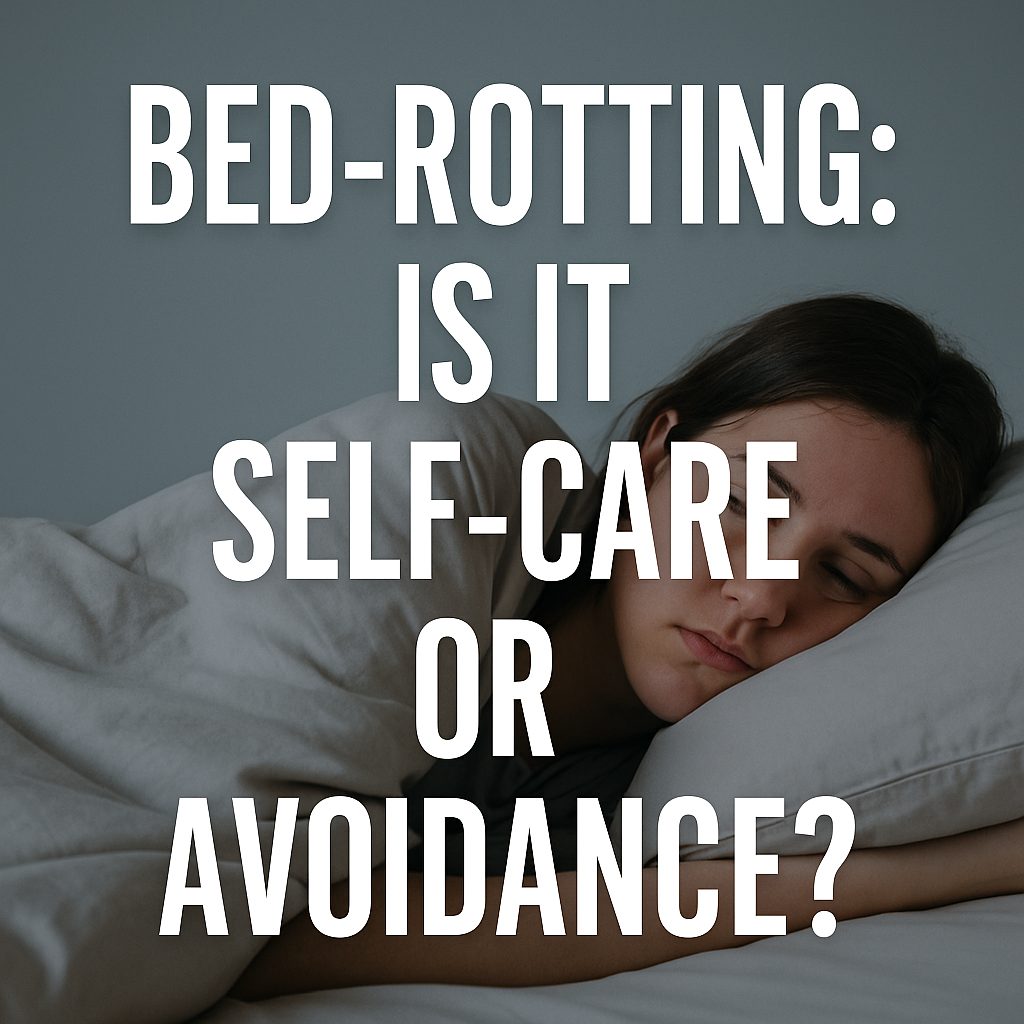
If you’ve opened TikTok recently, you’ve probably seen videos about “bed-rotting” — spending long stretches of time lying in bed to recharge, decompress, or simply check out. The term has exploded in popularity, especially among teens and young adults.
But as a therapist serving The Woodlands and greater Houston area, I see a deeper question beneath the trend:
Is bed-rotting actually helpful for your mental health… or is it a form of avoidance that keeps you stuck?
The truth depends on why you’re doing it — and what happens afterward.
⭐ What Is “Bed-Rotting,” Really?
Bed-rotting typically involves:
-
Staying in bed for hours (often during the day)
-
Scrolling, sleeping, or zoning out
-
Avoiding responsibilities or overstimulation
-
Seeking comfort after burnout or emotional overwhelm
For many people, it’s a mix of self-soothing, exhaustion, and escape.
👍 When Bed-Rotting Can Be Healthy
There are moments when lingering in bed isn’t harmful — it can actually support emotional regulation and recovery.
✓ You’re mentally or physically exhausted
After long work weeks, caregiving, finals, travel, or seasonal stress, extra rest is normal.
✓ You need a temporary reset
Lying down with your thoughts, decompressing, or slowing down your nervous system can help you regulate.
✓ You’re choosing rest intentionally
If you think, “I’m giving myself 1–2 hours to rest before I re-engage,” that’s meaningful self-care.
✓ You’re recovering from emotionally heavy seasons
Grief, transitions, burnout, and chronic stress often require spacious rest.
👎 When Bed-Rotting Becomes Unhealthy
These are signs bed-rotting is functioning more as avoidance than restoration:
✗ You’re escaping emotions
If being in bed helps you avoid sadness, anxiety, guilt, or hard conversations, it becomes a temporary relief that reinforces stuckness.
✗ You’re withdrawing from others
Isolation can worsen symptoms of depression or anxiety—especially if you already feel alone.
✗ It disrupts your sleep cycle
Napping or lying in bed all day often leads to nighttime insomnia, grogginess, and mood swings.
✗ You feel worse after
If bed-rotting leaves you more overwhelmed, disconnected, or ashamed, it’s not functioning as healthy rest.
✗ It becomes your main coping strategy
When rest becomes hiding, your world gets smaller.
🎯 ACT-Based Perspective: Rest Without Avoidance
Utilizing Acceptance and Commitment Therapy, we help clients build a healthier relationship with rest — one that honors their emotions without letting avoidance take over.
Here are a few practical tools:
1. Drop Anchor
A grounding skill to steady yourself when overwhelmed:
-
Plant feet on the ground
-
Slow your breathing
-
Name what you’re feeling
-
Notice your surroundings
This helps you stay present rather than immediately retreating into bed.
2. Willingness Over Avoidance
Instead of escaping discomfort, practice:
-
Feeling the emotion
-
Letting it be there
-
Taking a small value-aligned action anyway
You don’t have to “fix” the feeling — just make room for it.
3. Values Check-In
Ask yourself:
“Would future-me be grateful I spent my day this way?”
If yes, rest intentionally. If not, take one small meaningful step forward.
4. The REST Framework (not ROT)
R — Regulate: grounding, breathing
E — Engage: one tiny meaningful action (shower, make bed, drink water)
S — Support: reach out to someone
T — Transition: move out of bed and into your day
This supports rest without slipping into avoidant patterns.
🏡 Why This Matters in The Woodlands, TX
Many clients in The Woodlands and Houston area struggle with:
-
High-demand jobs
-
Long commutes
-
Parenting stress
-
Relationship pressure
-
Seasonal exhaustion
-
Overstimulation from screens
-
Family responsibilities
When life feels overwhelming, bed-rotting can feel like the only escape.
But sustainable mental health comes from balanced rest, healthy boundaries, and coping skills that help you move toward the life you want — not hide from it.
🤍 Final Thoughts
Rest is essential. Your body and mind need downtime. There is nothing wrong with taking a day to decompress in bed.
But if bed-rotting is becoming your default coping tool — or if you feel stuck, unmotivated, or disconnected — you don’t have to navigate that alone.
Therapy can help you:
-
Understand what your mind is trying to avoid
-
Build healthier rest habits
-
Strengthen emotional resilience
-
Reconnect with your values
-
Create a life that feels grounded and meaningful
If you’re ready to break the cycle and find a healthier balance, we’re here to help.
📍 Counseling in The Woodlands, TX
If you’d like support with anxiety, burnout, emotional regulation, or building healthier coping strategies, you can schedule a session here:
Luna & Sol Counseling PLLC — The Woodlands, TX
Individual Therapy | Anxiety | Stress | ACT-Based Care
Reach out to start
your healing journey today.