
Why Procrastination Happens and How to Overcome It
Procrastination is a challenge that leaves many feeling stuck, overwhelmed, and frustrated. Whether it’s avoiding a daunting work project, putting off a phone call, or delaying daily chores, procrastination can feel like an uphill battle.
Acceptance and Commitment Therapy (ACT) offers skills for noticing difficult thoughts and feelings, directing attention toward what matters, and gaining more choice over your actions. Making room means acknowledging discomfort while also seeing your needs and options. These skills work alongside practical support, clear instructions, realistic demands, and care for your energy.
Why Do We Procrastinate?
Procrastination isn’t about laziness. Often, it’s rooted in deeper emotional or mental hurdles, such as:
- Fear of failure: Doubts about completing a task well.
- Overwhelm: Feeling like the task is too big or unmanageable.
- Avoidance of discomfort: Avoiding unpleasant emotions triggered by the task.
ADHD, depression, exhaustion, unclear instructions, limited resources, and workload can also affect starting. Understanding the barriers helps you choose support that fits.
7 ACT-Based Tips to Overcome Procrastination
1. Break Tasks into Bite-Sized Chunks
Large tasks can feel overwhelming. Break them down into smaller, manageable steps.
- Example: Instead of “Write the report,” try “Draft the introduction” or “List key points for the outline.”
Starting small reduces resistance, builds momentum, and makes the task feel achievable.
2. Identify the Barriers
ACT highlights common barriers that prevent action:
- Being hooked by unhelpful thoughts (e.g., “I’ll never finish this”).
- Avoiding discomfort (e.g., boredom, fear).
- Feeling disconnected from values (e.g., forgetting why the task matters).
- Pursuing unclear or unrealistic goals.
How to Overcome These Barriers:
- Practice mindfulness: Acknowledge unhelpful thoughts without letting them control you.
- Make room with support: Acknowledge the discomfort, notice your surroundings and needs, and consider a workable response. You do not have to wait for it to disappear, and you do not have to push through overload.
- Reconnect with your values: Reflect on how completing the task aligns with what matters to you.
3. Use the Choice Point Model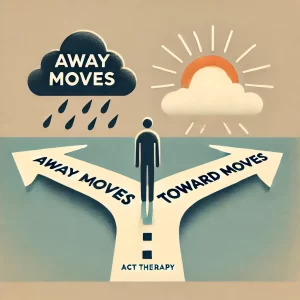
Imagine every task as a fork in the road:
- Away moves bring short-term relief but may move you away from what matters over time. Check the context; rest and protection are not automatically avoidance.
- Toward moves align with your values and help you progress toward your goals.
Ask yourself, “What matters here, what do I need, and which response is workable?” A supported task step, a boundary, rest, or asking for help may fit. The aim is to reduce how automatically discomfort makes the decision.
4. Try a Brief, Supported Start
Choose a brief starting window that fits your capacity, such as one to five minutes. Identify one visible action and any support it needs. When the time ends, decide whether to continue, adjust, rest, or get help; continuing is optional.
Pro Tip: Use a timer to create a clear starting and stopping point, making it easier to get started.
5. Create Accountability
External accountability can be a powerful motivator. Share your goals with a friend, colleague, or coach.
- Example: Tell someone, “I’ll send you the first draft of my report by 3 PM.”
Check whether accountability helps or adds pressure. A trusted person can offer company, clarification, or a check-in without judgment.
6. Practice Self-Compassion
Self-criticism often keeps people stuck. Instead of beating yourself up for procrastinating, be kind to yourself.
- Reframe your mindset:
- Instead of: “I’m so lazy for putting this off.”
- Try: “This feels overwhelming. What would make the next step more accessible, and do I need rest or help?”
Self-compassion makes room to understand the difficulty and respond to your needs.
7. Celebrate Small Wins
Positive reinforcement is key to building habits that stick. Reward yourself for progress, no matter how small.
- Example: Finished outlining a project? Take a short walk or treat yourself to a favorite snack.
Celebrating small wins creates a sense of accomplishment and makes it easier to tackle future tasks.
FAQs About Procrastination
1. Why do I procrastinate even when I want to stop?
Procrastination is often tied to fear, overwhelm, or discomfort. Understanding your triggers and practicing mindfulness can help you address the root causes.
2. Can procrastination ever be a good thing?
Sometimes, taking a break can provide clarity or improve results. However, chronic procrastination often leads to stress and missed opportunities.
3. How can I stop procrastinating on big tasks?
Break large tasks into smaller steps, focus on the next actionable item, and use the 5-minute rule to get started.
4. Does ACT really help with procrastination?
ACT may help you notice the thoughts and feelings pulling you off course, refocus attention, and choose a response more deliberately. It should be paired with support for practical and executive-function barriers.
5. What’s the best way to hold myself accountable?
Share your goals with someone you trust or set clear deadlines with reminders. External accountability often increases follow-through.
6. How can I be kinder to myself when I procrastinate?
Recognize that procrastination is a normal behavior. Shift your focus to what you can do now, and celebrate even small progress.
For a deeper dive into how procrastination affects mental health and strategies to overcome it, check out this insightful guide from Psychology Today.
Take Action Today
Notice which strategy makes daily life more workable. Useful changes can include starting with support, spending less time caught in self-criticism, or recognizing when the task, demands, or environment need to change.
Choose a manageable experiment and review what helps. You can pause, adapt, or seek support.
Reach out to start
your healing journey today.